
MEI I
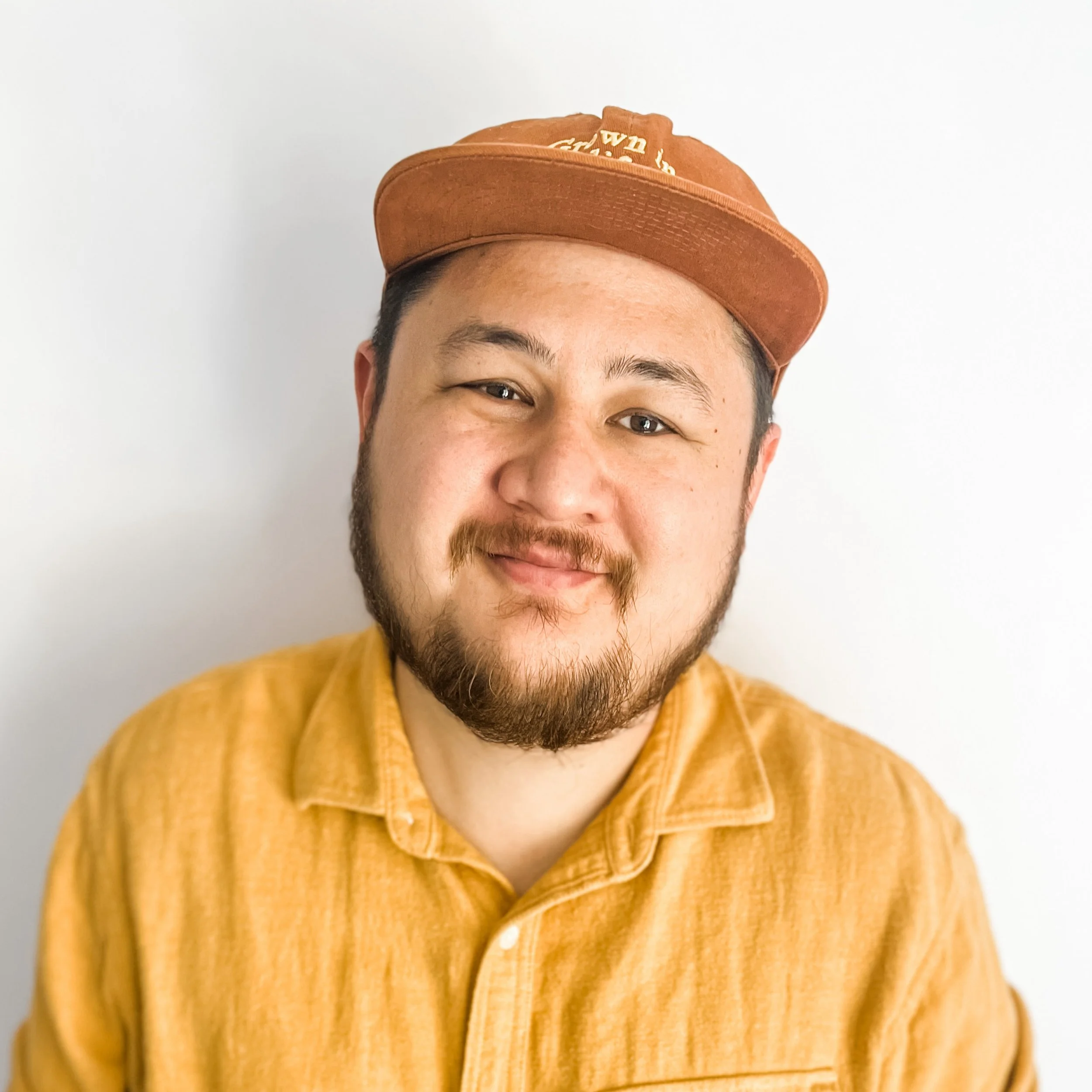
Jeff Phungglan
Please consider supporting this artist and their work.
LOGLINE
SciFi Drama Feature
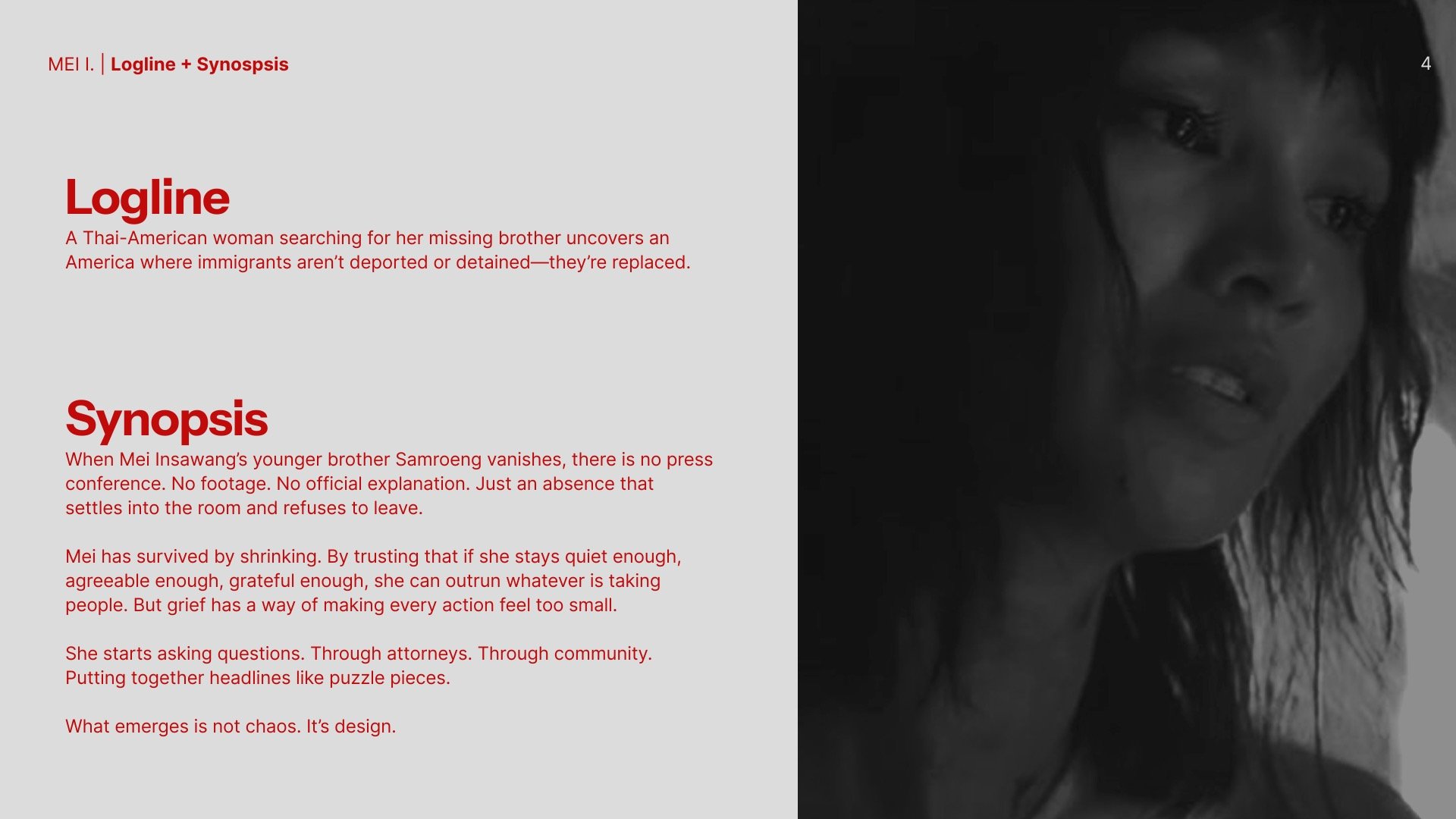
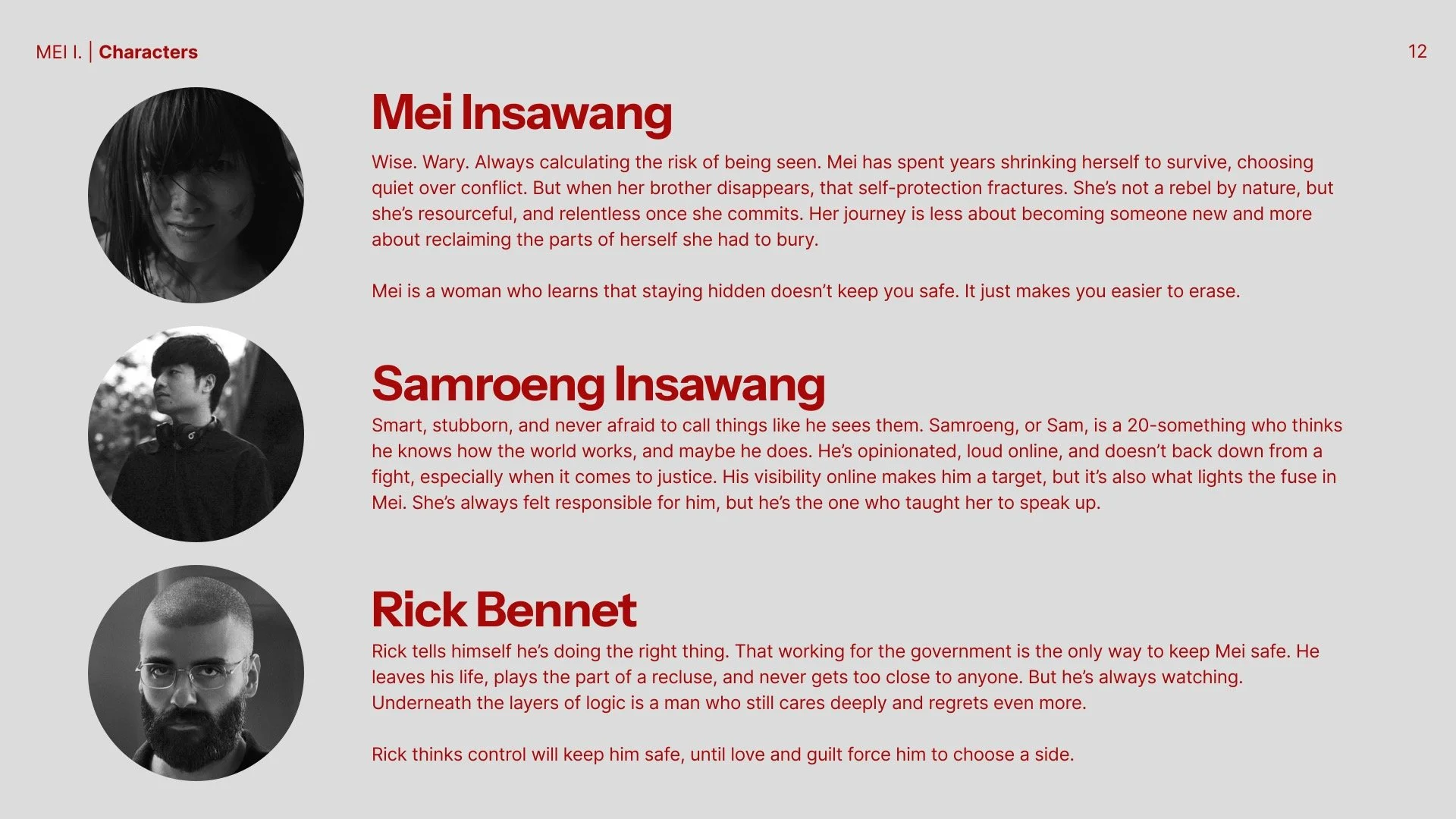
A Thai-American woman searching for her missing brother uncovers an America where immigrants aren’t deported or detained—they’re replaced.
SYNOPSIS
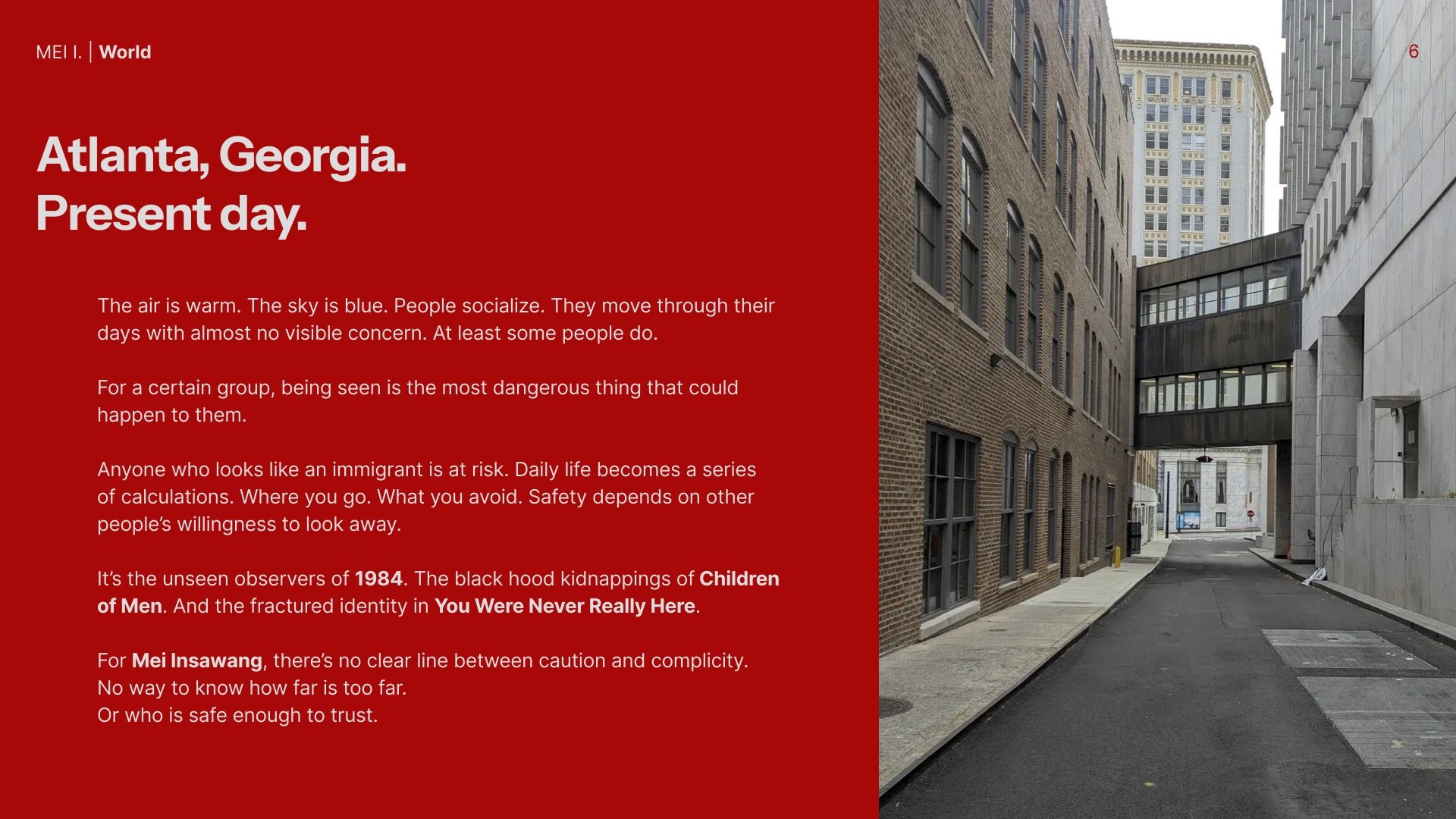
Atlanta, GA. Present day.
The air is warm. The sky is blue. People move through brunch lines and BeltLine jogs like disappearances are something that happen somewhere else.
But for anyone who even looks like an immigrant, being seen is dangerous. Daily life becomes a series of calculations. Where you go. What you avoid. Who might be watching.
When Mei Insawang’s younger brother Samroeng vanishes, there is no press conference. No official explanation. Just a void.
Until this point, Mei has survived by shrinking. By believing that if she stays quiet enough, agreeable enough, she can outrun whatever is taking people. But grief makes smallness impossible.
As she begins searching a pattern emerges. It’s not chaos. It’s all by design. A government program operating just beneath public scrutiny, secretly conditioning those it deems inconvenient.
When Mei herself is pulled into that machinery, the line between caution and complicity dissolves. She escapes with evidence that could expose what’s happening and documents that could allow her to flee.
Escape is one option.
Exposing what’s happening is another.
ARTISTIC STATEMENT
Pattaya, Thailand. 1970. A six-year-old boy wakes up to an empty house. His mother has left for America. His sisters will be scattered across the country. By nightfall, he will be living with his grandmother in Bangkok.
That boy was my father.
Separation shaped my family long before it shaped my work. It taught us that safety comes from staying small, from keeping your head down, from not disrupting the room. Those instincts traveled across oceans and into my generation.
That’s where Mei I. takes root.
I am drawn to stories about people who survive through silence. The film begins inside that strategy and slowly reveals its limits.
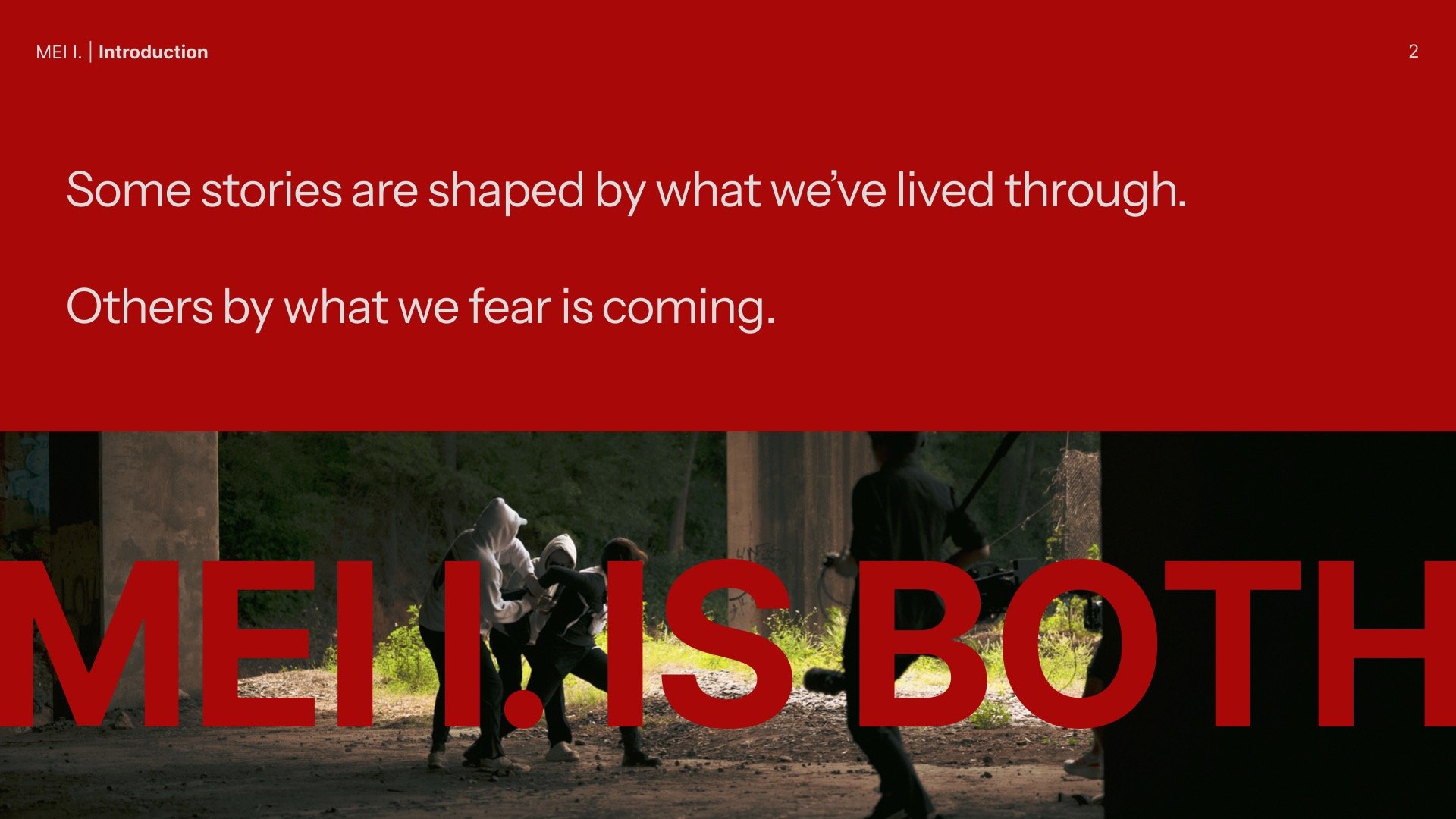
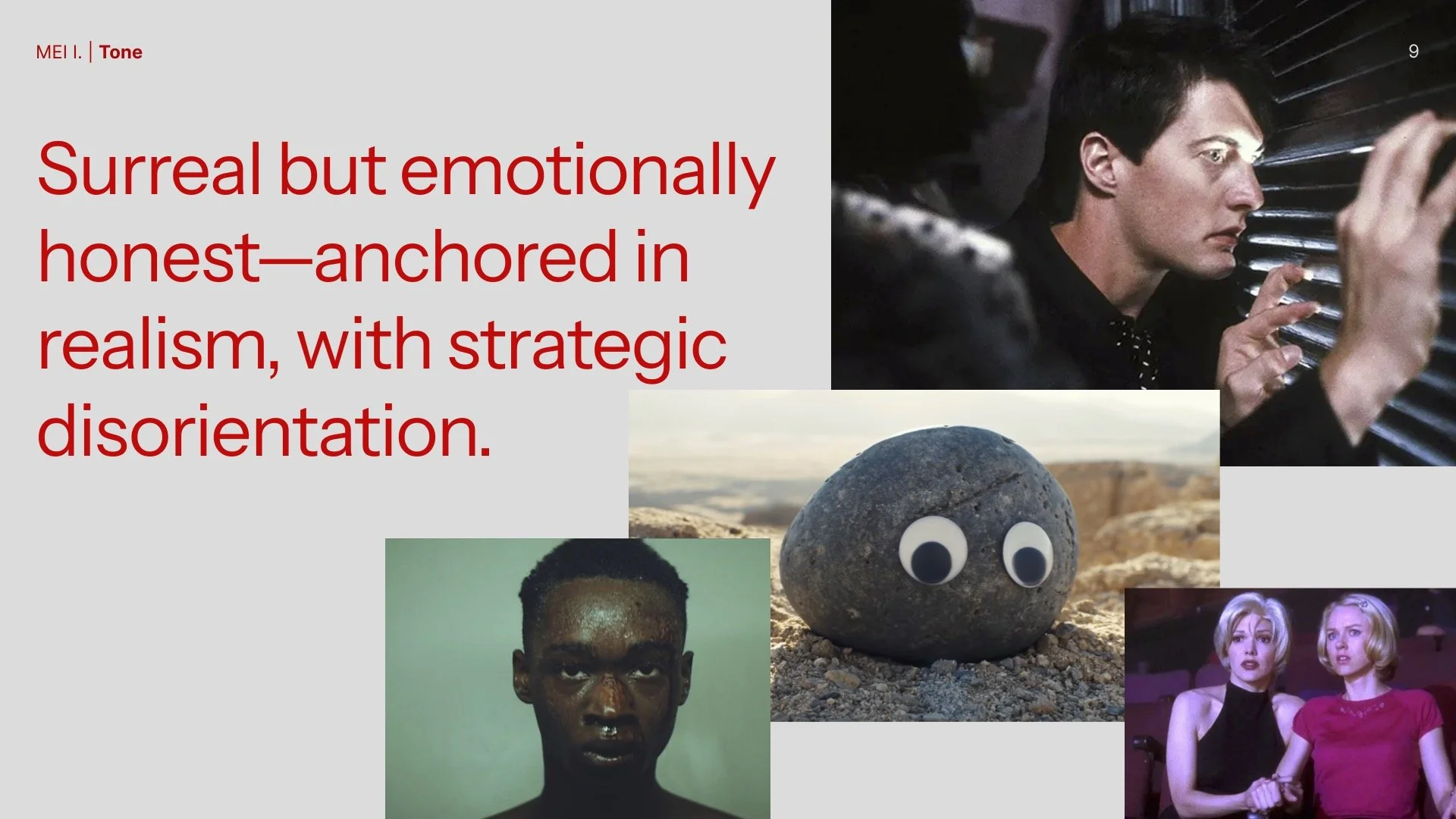
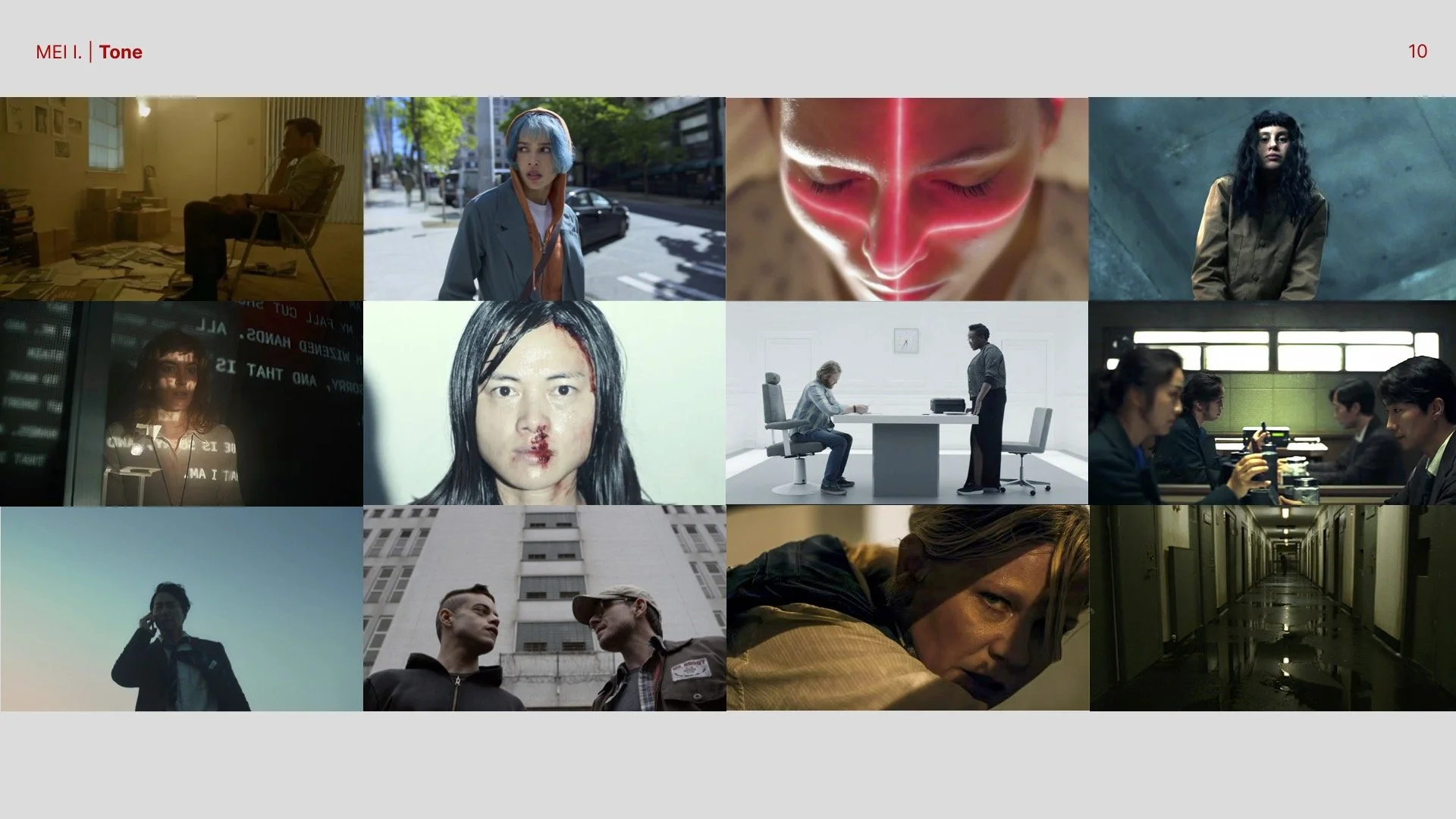
The world of Mei I. is warm and familiar. The threat is procedural and rarely shown in full. By keeping danger just out of frame, the film mirrors how power often operates in real life: quiet, bureaucratic, difficult to name.
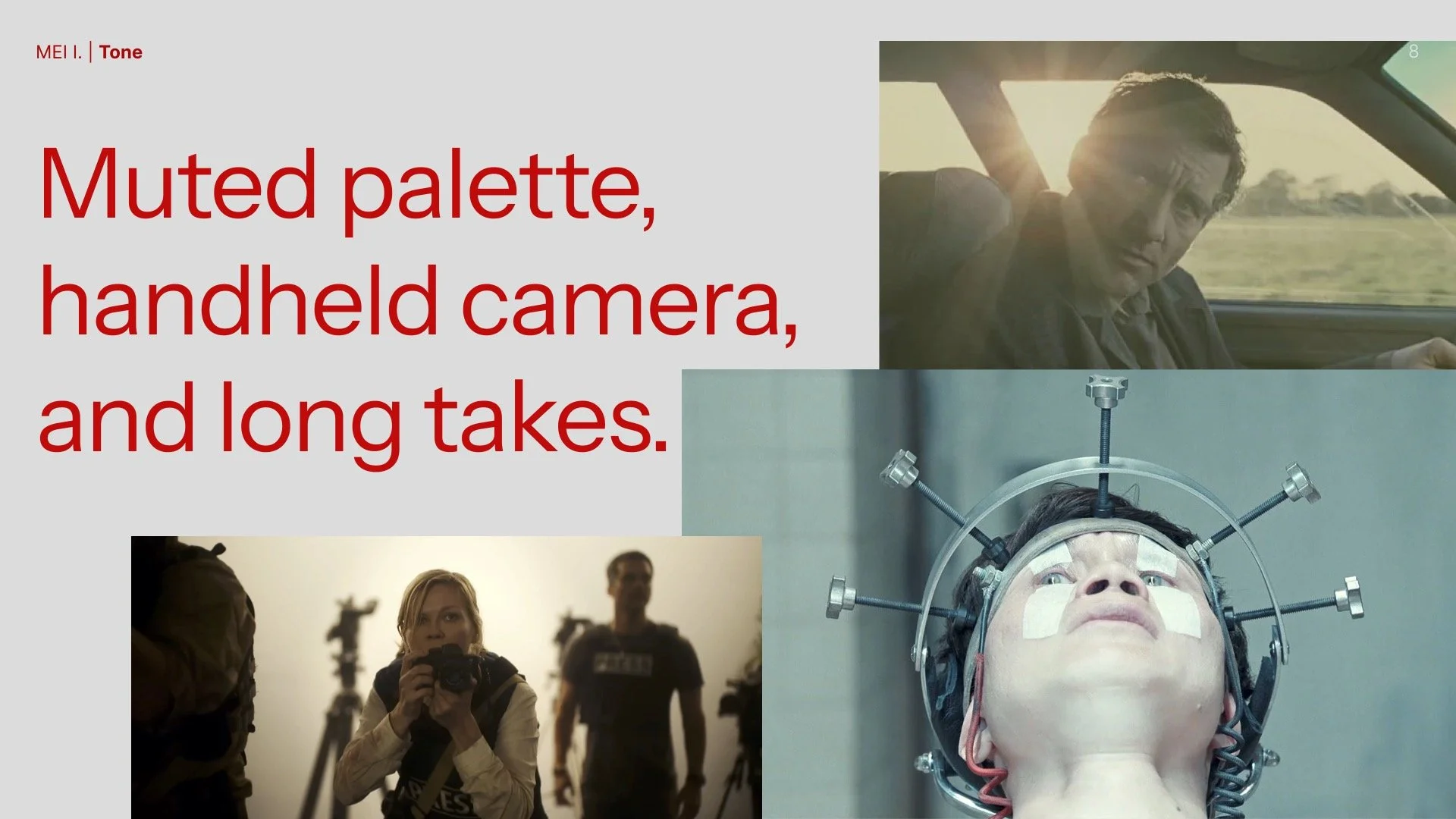
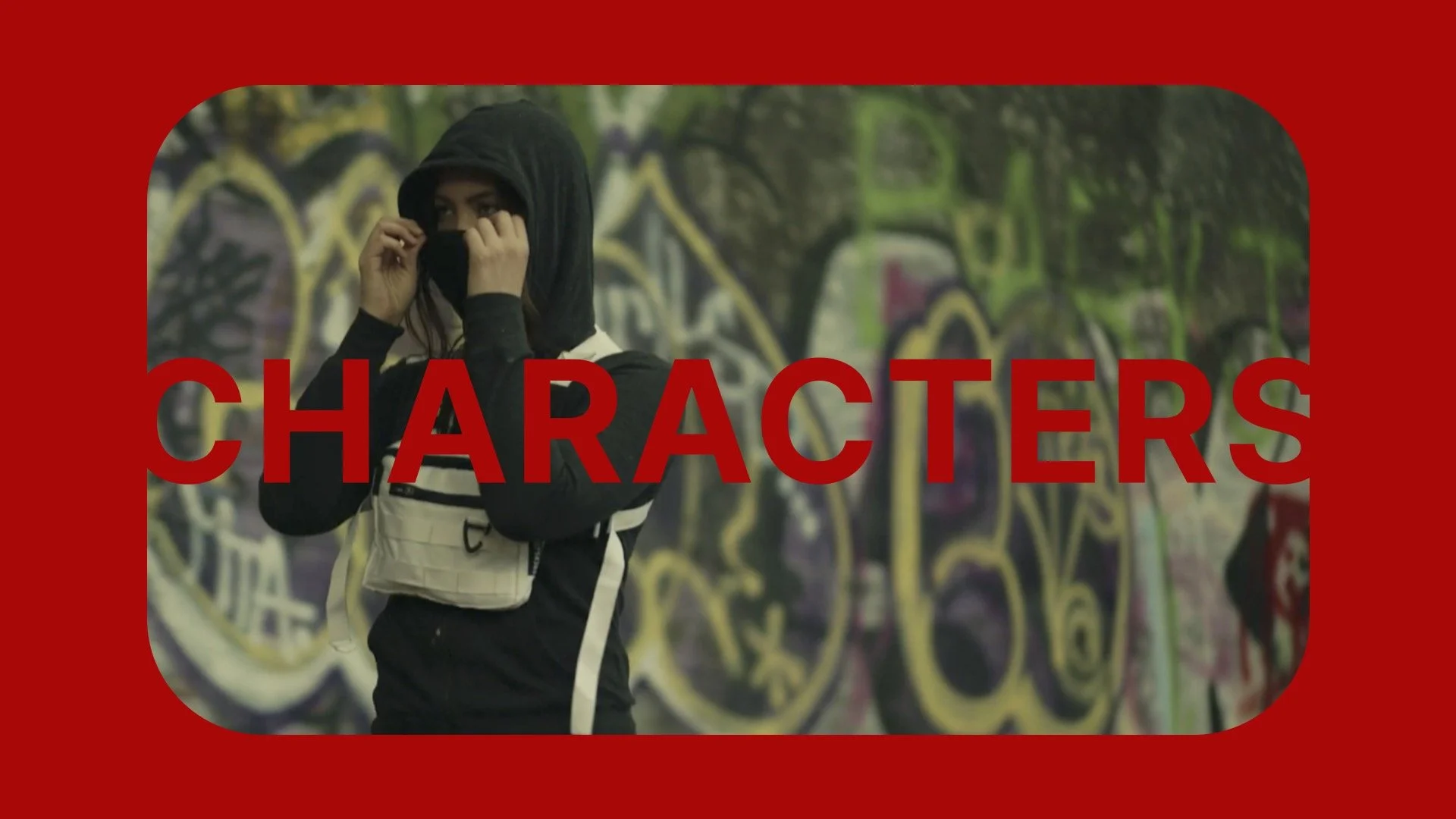
Visually, the camera stays close to Mei. Handheld and patient, it allows space for hesitation and fracture. Authority is expressed through clean lines and controlled spaces, while Mei’s world holds shadow and texture.
This is not a story about dismantling a system. It is about reclaiming authorship. Mei’s final act is not triumph, but a refusal to disappear.
PITCH DECK

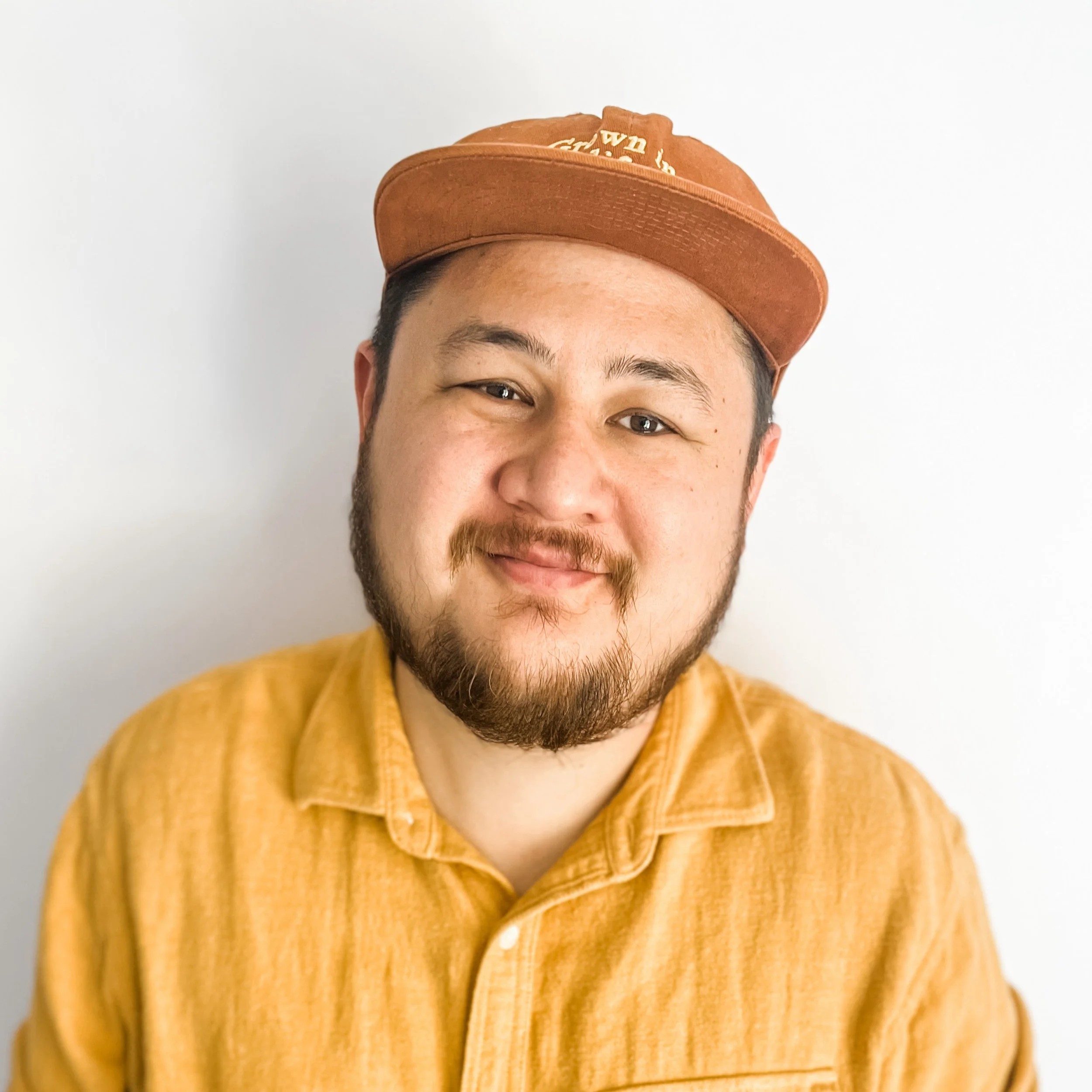
Jeff Phungglan. Writer & Director
Jeff Phungglan is a Thai-American writer and director based in Atlanta. His work explores identity, power, and the pressure to assimilate until something fractures.
His short films have screened at festivals and earned recognition for their restrained, psychologically grounded approach to genre. Mei I., his debut feature, expands that vision into a near-future thriller grounded in personal history and present-day unease.
An award-winning advertising creative by day, Jeff builds stories with precision and control, favoring implication over spectacle. He runs Phuket Productions, and is a father of three, which has reshaped how he thinks about protection, legacy, and free time.

James Louise. Producer
James Louise is an Atlanta-based producer and writer drawn to stories about people navigating systems not designed for them.
Her lived experience with neurodevelopmental differences informs her sensitivity to power dynamics, moral ambiguity, and the unspoken rules that determine who belongs. She gravitates toward projects that interrogate authority without flattening the humanity inside it.
After years working on scripted television in New York, James returned to Atlanta with hands-on production experience and a sharp creative instinct. She’s known for running a disciplined set and championing emerging creatives who are ready to level up.
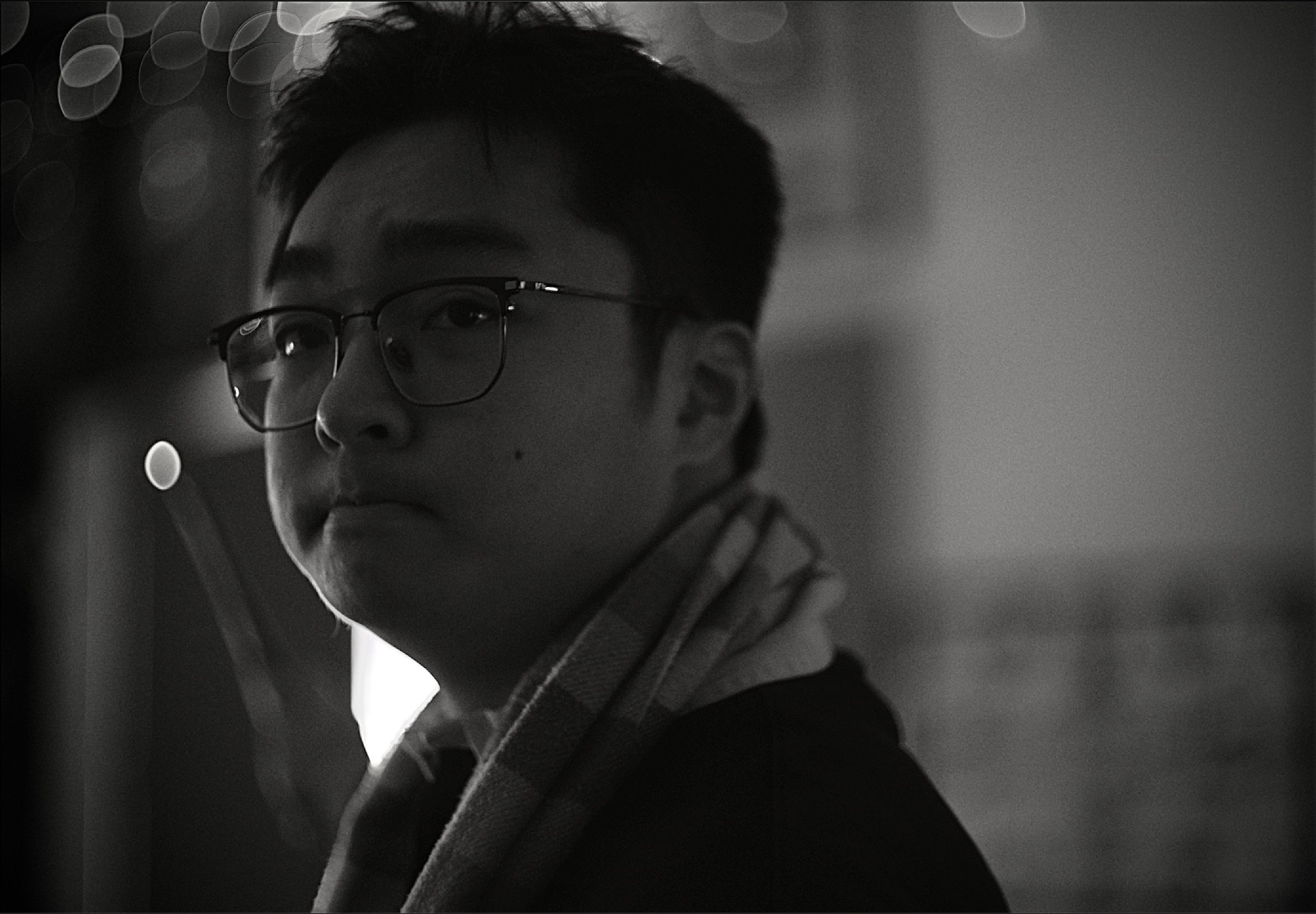
Harry Phan. Director of Photography
Harry Phan is a Vietnamese-born cinematographer whose visual language is shaped by living between Vietnam and the United States. His work blends Southeast Asian lyricism with the bold contrast and emotional restraint of Eastern European cinema.
Drawn to stories of identity, displacement, and memory, Harry favors natural light, textured compositions, and deliberate camera movement. His images allow tension to accumulate inside the frame before tightening its hold.
Stowe Story Labs alumni can initiate an application for fiscal agency here.