Reflections on Film from Berlin
by David Rocchio
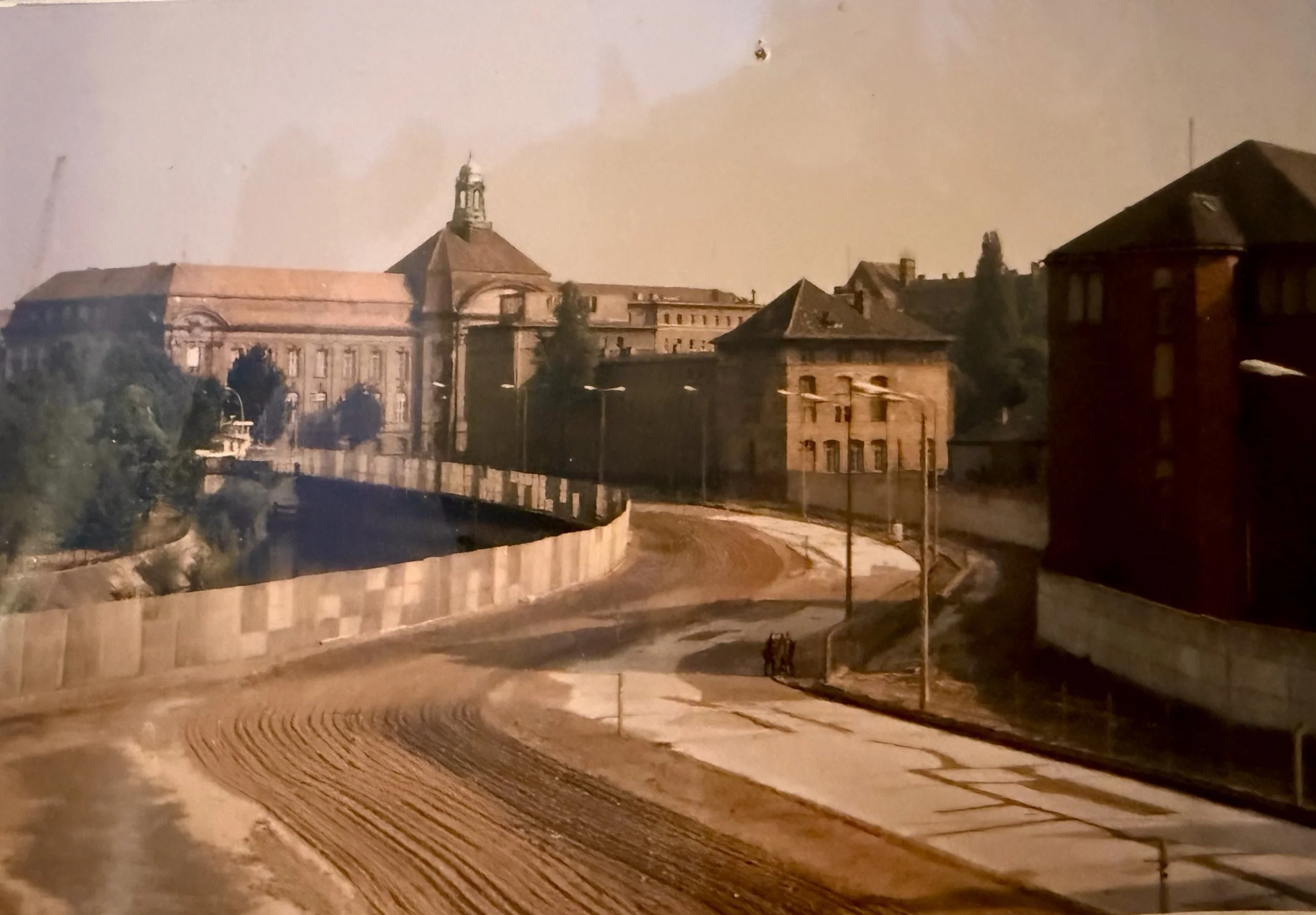
Snapshot from train traveling from East to West Berlin, August 1984
Berlin has changed dramatically since my first visit. I took the picture to the right on a train from East Berlin to West Berlin in the summer of 1984. How I came to be on that train is a long story, and not important right now (although I’m not opposed to telling the story, at length, if asked).
Suffice it to say, things are different today (purposeful understatement). One thing that is different is the film industry.
I have been attending Berlinale/EFM for many years. It is my favorite market. People at the EFM are happy to meet, no matter how busy. It is impossible not to have meaningful conversations at every turn, whether in the beautiful Martin Gropius Bau, which hosts the marketplace, or on the streets of Berlin. Wonderful films are both born and exhibited at the Market and of course in the Festival. As we are all seeing in the news just now, the Berlinale does not back away from presenting powerful films. To borrow a phrase from Tricia Tuttle, film can “build connections to our shared humanity, which is priceless in a fractured world,” and we need such stories today.
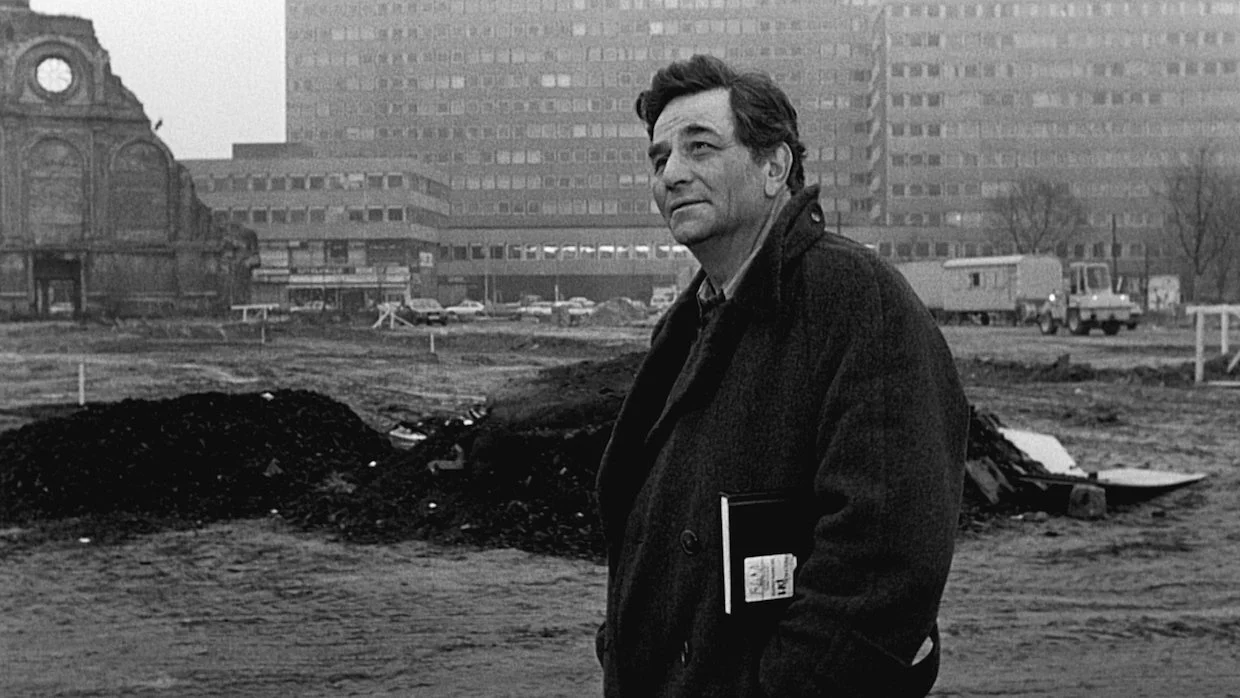
Building a film is a collaborative ecosystem, and that system is on display at the EFM. (Image at left from Wim Wenders’ “Wings of Desire.” The still features Peter Falk at this best, in an earlier version of Berlin.)
For those in the United States, here’s a primer on the international independent film ecosystem: In many countries, public funding agencies and carefully negotiated co‑production agreements enable collaboration across borders and provide essential support for filmmaking. This public‑private partnership model helps films with strong artistic visions come to life and reach audiences.
The sales system certainly feeds thoughtful, and sometimes cold, truth into the process by which projects advance and are positioned. Of course films are under pressure to do well both artistically and economically, but the pressure to generate financial return is tempered by this structure.
The public finance systems, the co-production treaties, and the support of theatrical release allow for the art to punch through. Again, projects should be commercially viable. Reductive to make a sale? Not necessarily. And as noted below, ‘Art Sells.’
In an interview with Screen Daily, the new head of the French film board (CNC), Gaëtan Bruel said this about the markets and what audiences want: “The message from audiences worldwide is unmistakable: while financiers push for cheaper films and AI-driven productivity, viewers are asking for bold, distinctive works, full stop.” That was exciting to read.
People do want films that give them something to think about, talk about, and really dig into. Paul Thomas Anderson summed it up well and colorfully at the BAFTAs: “Anybody who says movies aren’t good anymore can piss right off, because this is a great fucking year. We have a line from Nina Simone we stole in our film. She says, ‘I know what freedom is, it’s no fear.’ Let’s keep making things without fear.” (The still to the right is from One Battle After Another. The still features Benicio del Toro.)
And people want films to see in theaters. I certainly want to see One Battle After Another in a theater ….
In my experience, to also borrow from the late, great Nina Simone, the EFM pushes for freedom, and that helps explain why the cold, big, landlocked capital city in Central Europe in February is my favorite filmic stop each year.
The Berlinale and the EFM are vibrant. The EFM keeps its conversational approach to the madness of the film industry, which is a kindness. It also pushes into the art of story, which is a blessing. I hinted at it above, and want to be clear. I believe theatrical must play a major — even if constantly evolving — role in the success of the global independent film ecosystem. As with why I was on a train between the two Berlins in 1984, I am always happy to have this conversation as well.
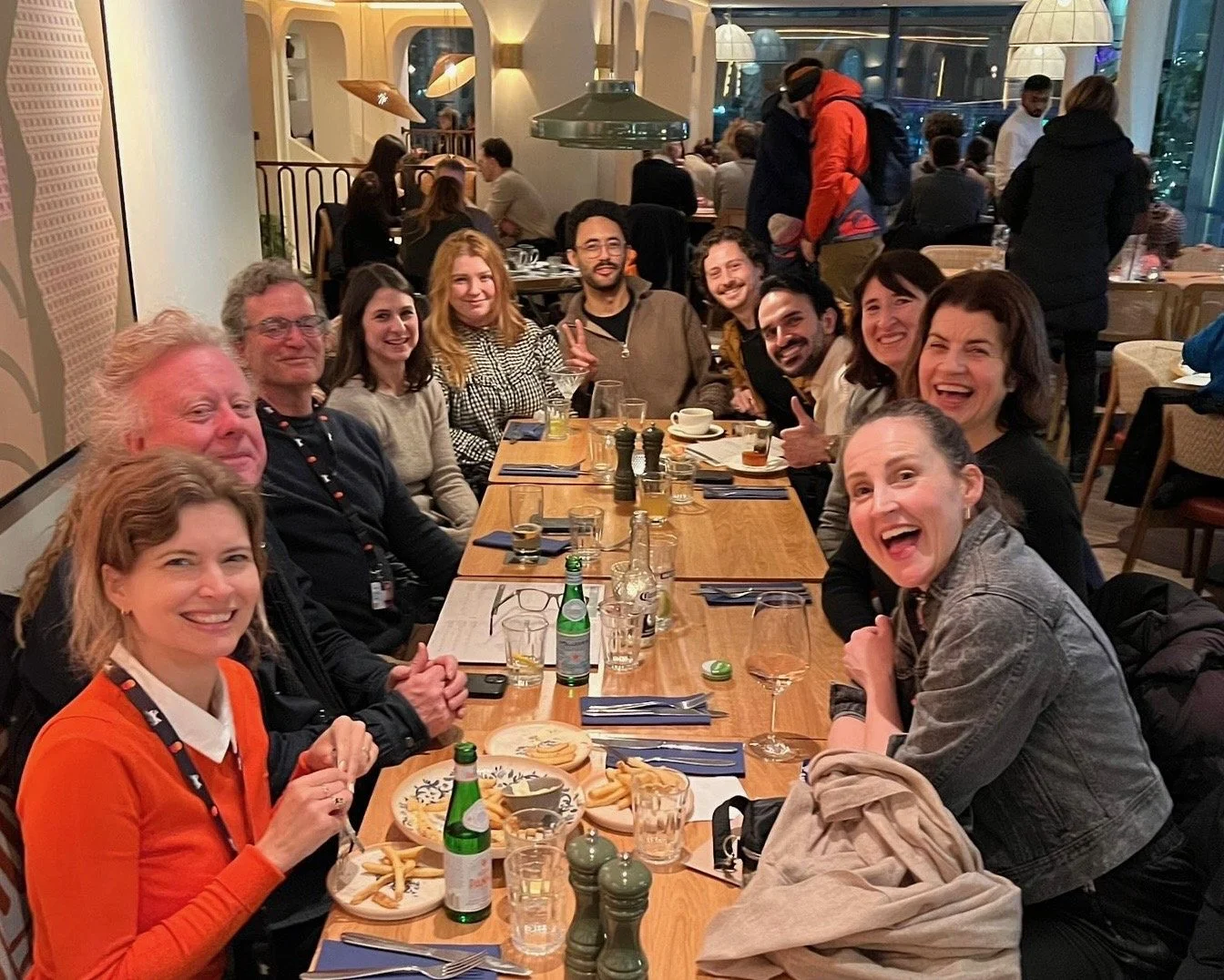
At Stowe, we are leaning into helping our community members find their voices and build their stories for hungry audiences, globally. Being at the EFM greatly supports this effort.
There were dozens of Stowe alums and mentors and partners at the Market this year (and in the picture to the left, here are a few of us sharing a beer in Potsdamer Platz). And now projects are going to start to get made. What could be more fun?